Posts In: Baby-led Potty Training

Voom 2016: Vote, Shortlist, Pitch, Onwards!

Voom 2016 was quite an experience! I didn’t get to #pitchtorich, but thanks to phenomenal support from friends old and new, I made it onto the shortlist and pitched Flaparaps to the panel of experts.

Here’s a roundup for those who want to re-live it, a hint at what the future has in store, and a big dollop of encouragement for anyone feeling inspired.

The Pitch (video) | The Pledgers (cartoon) | The ‘Why?’ | What’s Next? | Be Inspired!

The Pitch


Born Ready Jenn, pitching Flaparaps to the #voom judges. (The thumbnail isn’t me! Hit ‘play’ to start in the right place.)

This wasn’t just a pitch, it was a pitchathon – for the judges, at least!

If you watch my pitch, the judge on the left is Peter Williams, co-founder of Jack Wills – he’s looking alert and sprightly because he arrived in the morning just like me. Then come the ‘marathon’ judges who have been sitting in that room (with the odd 15 minute break) for nearly 24 hours: Andy Fishburn, Head of Investment at Virgin StartUp, Julie Deane OBE, Founder of Cambridge Satchel Company and the guy controlling the panel in the pink shirt is Peter Kelly, Managing Director of Virgin Media Business. No one ever told me who the last chap was…

The Pledgers

“Stand shoulder to shoulder with like-minded souls for a cartoonly show of parenting camaraderie!”
“An imaginary meet-up like no other, to be held in a large field, slightly off the beaten parenting track.”

67 people ‘came’ to our virtual rally and together pledged Β£609 which will be put towards advertising on social media.

I’ve never mingled with so many pottying fans in my life!

Here’s the cartoon πŸ™‚

Video that pans across the Born Ready Rally cartoon. There are too many people to see them all in a static image on a small screen.

See close-ups of individual cartoons here.

Feeling Inspired?

Me too!

And if you were here, I’d talk your ears off!

Instead, I’m giving a talk about ‘mumpreneurs’ that will give you so many ideas you be buzzing for days. It will be broadcast live – a bit like voom, but with more photos, less sophisticated camera work and my loft for a backdrop :-/

It’s going to be fun! Let me know where to send the link.

My Voom Story – The ‘Why?’

I decided to enter voom on a whim. The competition was already live and had over 150 entries – some of which looked pretty sophisticated.

It was the school holidays so I was tripping over children left right and centre, we were visiting the grand parents, I didn’t have any time, or a plan, and I was about to dive headlong into a Virgin publicity stunt.

Not only that, but the first round was a straight up popularity contest and baby pottying is a seriously niche activity.

Niche, but nice πŸ™‚ Like Born Ready on Facebook:

Were the odds worth the effort?

Yes!! Little to lose and lots to gain πŸ™‚

Especially because I didn’t enter #voom for the grand prize.

I entered for the association with Richard Branson.

I wanted to use his name to introduce myself to the local media, and borrow his image to lift my own confidence.

With that in mind, I’m delighted with the outcome πŸ™‚

We clocked up 2,052 votes (every single one a vote of confidence for me), I was in the paper and on the radio, and I made contact with people I’ve not spoken to for years to ask for their support.

Now, that’s a pretty lame reason to contact someone, but couple the begging-for-a-vote with a bit of family news and a photo of the kids and soon my inbox felt like Christmas. That’s a win right there.

Making a go of it

The first step was creating a pitch page to be proud of with a decent video to go with it – and thus began a string of 4am bedtimes that I couldn’t blame on the children.

After the success of this facebook video, I decided to liven up my entry with cartoons to illustrate my key objections to disposables (convenient though they may be).

At half term, the only time for doodling is at night.

At half term, the only time for doodling is at night. Cartoons for the pitch page to show how disposables are used as wearable wee storage.

From there, came the idea for the crowdfunder cartoon – much to the delight of my girls, who had never had so many people to dress in pink. We compromised on blue-y purple a lot of the time, because pink is so… PINK!

Dressing the pledgers at the #bornreadyrally

Dressing the pledgers at the #bornreadyrally

Finding the Votes for the first round

Entering a public vote is setting yourself up for humiliation :-/

But, facing up to that was part of the appeal of entering. Up-sides everywhere πŸ˜‰

I knew my friends would vote, and the Born Ready crowd of course. But what I didn’t realise was that so many people would badger their friends to vote on my behalf.

That Upminster locals would be so incredibly supportive. That mums with micro businesses in Australia would cheer me on. That cloth nappy lovers around the globe would adopt my cause as theirs. That I would find it in me to pitch to parents in parks, and on trains and at the disco (get down and dance Center Parcs!). That I would get emails of support from people I’d never met who were really rooting for me!

With a week to go, when I realised we needed 50 votes a day to stay in the game, I thought we would never keep up. But every day the ‘votes to keep pace’ kept increasing, and somehow we hung in there. I had less than 3 hours sleep a night over the last 4 days. In the final 24 hours we got more than 800 votes and most of them were from friends of voters! Incredible!

In the end, there were 4,096 entries in voom.

We finished in 46th and were shortlisted for the pitchathon – Hooraaaaaaaay!

Now I needed a new plan. A business plan.

(You probably thought I had a business plan already… and I do, but it’s all in my head and revolves around the way I interact with parents on the internet. The numbers of people who join my facebook group every month, or sign up for Born Ready videos or articles. These are not the kind of numbers that anyone obsessed with VOOMing is going to find impressive… I find them impressive – but I swim in a small pond.)

The Pitchathon

I decided to spend most of my 3 minute pitch selling the concept of baby pottying. I felt it was the only way to do Flaparaps justice.

All the features that make them fantastic for pottying don’t mean anything if you can’t see why someone would bother in the first place. So, I tried to pitch both a concept and a product in 3 minutes flat… Tricky.

I would have liked to ad lib my pitch, but time was so tight and there was so much to say, I didn’t dare! Instead I mounted my script on coloured cardboard like a 6 year old narrator in a school play πŸ™‚

Three Minutes Plus Five

Peter Kelly, managing director of Virgin Business, with a Flaparap. #voom

Peter Kelly, managing director of Virgin Business, with a Flaparap. #voom

Voom had a pitch warm up man. His entire job was to make pitchers feel good about themselves before they stepped into The Room.

He gave a pep talk as I moved into the waiting room to be mic’d up, and then another 10 second booster as we waited together at the door.

“You’re the only expert on your product. Those guys – they know nothing! When they ask questions it’s because they don’t know the answers. They’re not trying to trip you up, they’re just interested. Go pitch. Good luck! Enjoy yourself! (And don’t trip over any cables…)”

There was a cross on the floor to stand on and I was told ‘try not to move about too much’.

As soon as it was underway, I didn’t notice the cameras. I forgot there were more people standing behind me than sitting in front of me (cameramen, photographer, Guinness World Record timekeepers etc). They were all so quiet – except when they were cueing me in or timing me out.

A very slick operation indeed! (but they had practiced on 124 pitches before mine πŸ˜‰ )

All in all, the pitch went well – and I don’t look nearly as nervous in the video as I felt at the time.

I demo’d with the bear (who had been unstitched, filled with large stones and sewn back up only the day before so that he would be a better weight for the demonstration), I have nice photos and I didn’t let anyone down. Good show.

I know I didn’t present a vision for world domination and sackfuls of cash, but through voom thousands of people have now heard of baby pottying and Flaparaps. As I said in my pitch – we need to start with education so I’m very pleased with that πŸ˜‰

The Buzz of ‘Backstage’

With Daniel Cluderay - one of last year's winners, backstage at voom.

Born Ready Jenn with Daniel Cluderay – one of last year’s winners, backstage at #voom.

I have two favourite memories of the pitchathon (and neither one relates to being in The Room in front of the panel!)

  1. Watching other people pitch. I saw some fabulous pitches! (On youtube, we didn’t get to watch via a two way mirror or anything πŸ˜‰ ) From people who started with the seed of an idea and ran with it so fast I wouldn’t see them for dust, to people who have clearly been at the top of their field for a long time and had the same confidence in their business goals as they had in their products. I learned a lot.

  2. Being in a room crammed with ‘do-ers’. People who saw a need or a problem or an opportunity and decided that they should be the ones to do something about it. Backstage at the pitchathon was buzzing. Every single person there had a strong idea and a whole heap of stories to go with it. I could have chatted my way around that room all day! Which is why…

I’ve booked my ticket for the voom Grand Final. That should be quite a show πŸ™‚

What’s Next?

More Flaparaps, of course πŸ™‚ But also…

More guest blogs and magazine articles.

More videos! Starting with another cartoon.

And more focus on reaching parents-to-be so they see pottying as a bonafide alternative to disposables-until-three.

Onwards!

Stay Inspired!

The pitchathon reminded me that there is nothing like being in a room full of people brimming with ideas.

This year I found that feeling at a national competition run by a billionaire. Last year it was when I gave a talk about micro businesses to PTA mums in the school hall.
Different setting, different scale, but exactly the same buzz!

I want to capture that again so I’m going to revive my talk in a different format – and this time everyone is invited – Yippee!

The talk showcases micro businesses that started with just one person, an idea, and the internet – and they will make you believe that anything is possible.

I run through examples of businesses run by mums that I identify with. Parents with ideas that could so easily have stayed ‘just ideas’ but are now great success stories.

Some created empires and inspired the masses. Others made a big difference in their own little niche. You don’t need to conquer the world for your skills to be useful or your knowledge to make a difference.

The internet is a great leveller – if you can write an email you won’t be daunted by the technology – and web based business is fascinating. Maybe I’ll be cheering you on in voom next year?

I’ve not rigged up the youtube links yet, but if you’re interested, let me know where to send them.
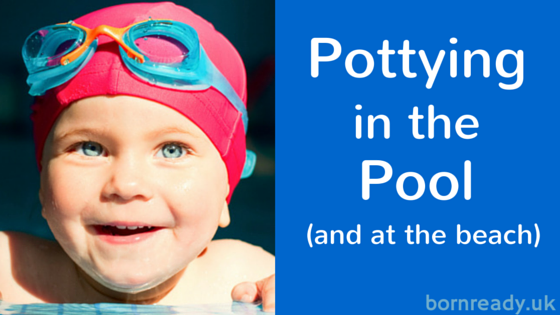
Pottying in the Pool and at the Beach

What should your child wear to the swimming pool if you ec?

In Summary

  • If you have ANY doubt about whether your child might poo in the pool, use a swim nappy.
  • If your child doesn’t have solid poo, use a swim nappy.
  • If your lesson stipulates a swim nappy, use a swim nappy.

Function over fashion | 5 tips | Travel potties | The beach! | Potty sign

Function Over Fashion

If you’re 99% sure they won’t poo, use a pair of swimmers with tight fitting legs i.e. trunks or bikini bottoms. If you want shorts for fashion / sun protection wear them over the top.

In a British indoor pool, you don’t need shorts. Anything that drags your child down or hampers their movement isn’t worth the fashion statement – in my opinion.

Let them wear skimpy swimmers and enjoy freedom of movement!

5 Tips for Less Stress When Pottying At The Pool

1. Dress for easy access.

Bikini bottoms or trunks are a LOT easier to get on and off a wet toddler than a swimsuit or a sun suit.

You’re not going to get much warning as it is.

Then you need to get out of the pool and to the toilets without falling over, while juggling armbands and possibly another child or two. Always assume the floor will be disgusting and try not to take anything off completely because you won’t have enough hands to hold it all. Armbands can stay on if you use trunks, bikini bottoms or two piece sun suits.

2. It’s all about the leg elastic.

Swim nappies don’t really contain wee, but they do contain poo (for long enough for you to deal with it) and so do tight fitting swimmers. Hence the recommendations for skimpy trunks or bikini bottoms.

3. Play it safe.

Poo in the pool is far more than a social faux pas. If your child poos their pants at the park, it’s embarrassing but ultimately it’s a mess just for you. If your child poos in the pool it will close for half a day.

I’ve had days at theme parks and campsites thrown out completely because some little shit has shat in the pool. I’ve seen kids do it, too – drop their pants and crouch in the shallows – as a lifeguard and as a parent. It’s a surprisingly common event.

Watch your children (because, you know, drowning hazards) and if they look even slightly like they might poo, channel Usain Bolt on the starting blocks!

If you spot other children about to get the pool shut down, be swift in your response there too. A poo on poolside can be dealt with. A poo in the water is worth preventing even if it means you have to have an awkward conversation with their parents.

4. Don’t panic.

There is already wee in the pool. I was a lifeguard at a leisure pool from the age of 16. We had wave machines, slides and long long queues. You wouldn’t believe the number of kids I saw wee in the pool. And on the stairs. And in the slide runouts.

Clearly, you need to try to get your child to the toilet, but if they wee in the pool it’s not the end of the world. Get them to the toilet to finish off (because it isn’t a habit you want to encourage) and don’t draw attention to yourself (because not everyone realises they’re already swimming in wee and they might freak out… :-/ ).

If your child has created a puddle, clean up after yourself by slooshing it into the swimming pool drains. If you’re a long way from a drain, get a lifeguard to help out. They have buckets and squeegees and they’ve seen it all before (from children a whole lot older than your toddler).

5. Anticipate!

Save yourself the mad scramble by taking your child to the loo before the last second.

If you usually use timing in your ec-ing, shorten the gaps between toilet visits while you’re in the pool. Something about being in all that water – even if your child isn’t actively drinking it – fills their bladders pretty quickly.

Always visit the loos on the way from the changing rooms to poolside (especially when you have more than one child) and always stop off again on your way out – otherwise you’ll be holding your child over the drain in your tiny cubicle and that’s best avoided!

If it takes you a while to get changed (again, multiple children will have a big impact here) stop off at the loos again when you’re dressed before heading off home. I like to mix it up a bit by visiting the dry-side toilets near reception on the way out. Just for variety πŸ˜‰

It might seem excessive, but if your child has been guzzling water for the last hour, this is by far the best way to have a pleasant journey home.

Like baby pottying / ec? Like Born Ready on Facebook:

Travel Potties

For tiddlers, your lock & lock box or bottle can save you trips to the toilets – especially at holiday pools where the grounds are extensive and you have some privacy.

The potette plus with bags or reusable silicon liner or a takeaway container underneath also works well. You can always line your liner with a muslin or something absorbent and then bag that for washing later.

And for those with enough space in their kit bags the my carry potty is like home from home – but with an airtight lid.

To be on the safe side, tuck a few small plastic bags into your pocket (or bumbag for trend setters such as myself πŸ˜‰ ). I like the kind that you put fruit and veg in at the greengrocer (they don’t have holes like the supermarket ones). With an absorbent cloth and a plastic bag there’s not much that you can’t handle. Be brave!

Hitting The Beach!

It’s holiday season (hooraaaaay!) and pottying on the beach is quite straight forward.

Take off your child’s nappy and give them a taste of the freedoms to come! (Unless you’re in the milkfed poo stages and think things will get messy.)

For easy access, use top-and-bottom sunsuits rather than all in ones. If you try that and your kids get two inches of bare back exposed to the sun when they dig in the sand, either tuck their top into their shorts, lather on the suncream or switch to an all-in-one and handle the inconvenience.

They’re going to be weeing on the sand or directly into the sea anyway so you might not bother stripping them first – in which case all-in-ones make no odds.

I wouldn’t let my kids poo on the beach, but I know those who do (discretely!) and then bag and bin it. They’re usually dog owners who bag and bin beach poo all the time. I don’t have a dog and prefer to imagine the sand that touches my feet is pristine and unsullied, so in a pinch we’d poo straight onto a bag – or venture to the toilets <shudder>

Wetsuits

If you’re using a wetsuit, it’s easier to let your tot wee while wearing it than try to strip it off – that’s how the surfers warm themselves up so they’ll be in good company πŸ˜‰

If you think you might get a rogue poo, use a swim nappy. (Stripping off a poo smeared wetsuit while trying to stop my children from eating sand and licking railings would be enough to tip me over the edge. I’d never venture further than my local park again :-/ )

The Potty Sign

The potty sign worked better for us in the pool, than anywhere else. We went to Center Parcs last weekend and still used it loads, despite the youngest being three and almost as big a chatterbox as her sisters.

For some reason, our toddlers gave very clear and deliberate communication when swimming. Maybe because there wasn’t that much distraction – the water was their entertainment – or maybe because we were always right there, or maybe because they had more practice in a 1 hour swim than a whole afternoon at the park.

A clear sign made it easy for our youngsters to get our attention and helped the adults communicate across crowded pools filled with shouting children. Excellent for splash zones too because even toddlers are sometimes a little way away from you.

Happy Pottying in the Summer Sunshine!

Born Ready Jenn.

I say Flaparap, you say Flapawrap. Flapperwrap. Flapparap.

I know, I know, the word ‘wrap’ begins with a ‘w’.

Flaparaps are drop-flap nappy wraps, so why aren’t they Flapawraps? Or Flapperwraps? Or Flappawraps? Flapper Wraps?

No good reason πŸ˜‰ I just think the word looks nicer without that ‘w’ in the middle of it.

Born Ready Flaparaps. ‘W’-free nappies for nappy-free babies.

In case you haven’t guessed, this blog post is to help google to help you to find Flaparaps – no matter how you spell your search query.

Here are the five places you’ll want to go from here:

  1. A full introduction to why Flaparaps are so great if you potty your baby.

  2. More about the fabrics and features, videos of the pads sluuuurping up liquid, and advice on how many to order for your needs.

  3. How to use and care for Flaparaps and pads (with more videos of them in action).

  4. Where and how to BUY Flaparaps.

  5. Flaparap reviews like these: We LOVE our Flaparaps!, Best ‘nappies’ I ever tried!, These save my sanity!, Flaparaps are the future!, Flaparaps are truly a marvellous invention!

Happy Pottying!

Born Ready Jenn

Why Night Nappies and Night Pottying / ec Are A Great Combination

Having slept with four ec’d babies, I’ve done my share of being wee’d on, and it taught me some basic truths about wet beds and night time potty training.

This is the biggie:

Night time nappy free is not like daytime nappy free.

During the day, wet pants mean something. They’re cold and uncomfortable. And if you have a child commando in fleece trousers they must feel horrible when they’re wet! With no pants at all, your toddler can look down and see the wee forming a puddle around their feet. Cause and effect. Perfect conditions for learning.

But in bed, being wet is something else entirely.

It’s warm, it’s comfortable, and there’s nothing to see.

From personal experience, I can tell you that in body temperature bedding, body temperature wee feels neither hot nor cold. It’s invisible to your body’s sense of touch. Infeelable. And by the time it’s soaked into clothes or bedding so there’s no splashable puddle, it’s actually quite difficult to identify that everything is wet.

If you’ve ever woken with a soaked shirt for other reasons, this will make intuitive sense.

For example, When I was breast feeding for England, I could wake up absolutely drenched in milk (waterproof mattress protectors are great for that, btw). Yet it was never the wetness of my shirt that woke me up – that was always something I discovered once I was awake.

I’ve slept in heat waves and under ridiculously heavy duvets and woken soaked in sweat. The wetness of my shirt didn’t wake me then, either.

And… I’ve been comfortably lying with a sleeping baby on my chest, under a blanket, and not been able to tell whether I’d been wee’d on or not. I was awake and I was suspicious – but I had to really put some effort into finding out.

A baby (or toddler, or child) who is going to ‘learn’ to be dry at night needs to respond to THE ACT of needing a wee or doing a wee. They can’t rely on the aftermath or their environment to program their brain.

So if your child is going to wee without noticing you might as well use nappies and save yourself oodles of stress and washing.

And yet! There are times when it makes perfect sense to take away nappies at night.

Like baby pottying / ec? Like Born Ready on Facebook:

When To Go Nappy Free At Night:

1) When you’re potty training. Properly potty training. Going for the finish line and teaching your child to notice every single time their bladder sends a message. Here, being nappy free at night is ideal because it consolidates what’s going on in the daytime. You want the night brain to respond in the same way as the day brain, rather than learning to ignore that message at night.

Bladder: Come in Brain, Come in Brain, We have a situation.
Brain: Hold on Bladder, let me check whether it’s safe… Yes, we have a nappy. I repeat, we have a nappy. Let loose.

If that happens a few times, the brain will switch from high alert to its familiar autopilot:

Bladder: Come in Brain, Come in Brain, We…
Brain: Never bother me again after 6pm. Empty at will.

For most children, when this happens they’re reverting to a lifelong ingrained subconscious habit, which it’s then very difficult to jolt them out of.

Had your chance… missed it.

[Old habits die hard, and some children trigger the old autopilot at night in certain circumstances.
– Some might wet wearing knickers, but be dry with a bare bum.
– Some will wet with a bare bum but be dry wearing knickers.
– Some will be dry for weeks, wear a disposable for 3 nights at Granny’s house and then wet the bed for three weeks straight.
With practice the brain will replace the old autopilot response with a new one: WAKE UP! And at that point it won’t matter what they wear to bed.]

2) When your child is dry virtually every night – with a bit of help from you – and it would be more comfortable and convenient if you didn’t bother with a nappy.

This is every ec-er’s dream scenario. Congratulations if it describes you πŸ™‚

Here’s when it’s fine to use a nappy at night…

When To Use A Nappy At Night:

1) At all other times.

My experience of pottying through the night, from newborn babies to fully potty trained toddlers, is that, just like daytime pottying, it’s attitude that shapes your child’s reactions.

If you respond to a child’s signals at night, you teach them that those signals are worth listening to.

And that has nothing to do with what they’re wearing.

Bedwetting Alarms and Pre-emptive Parents

Do you know about bed wetting alarms? They’re one of the solutions offered to older children (age 5+) who are chronic bedwetters. They’re wired into the child’s pants and the instant they get wet a loud alarm goes off – waking the child up. The child’s brain learns to anticipate the alarm – just like Pavlov’s dogs – and soon the alarm is redundant.

(This won’t work for all causes of bedwetting. If there’s no bladder-to-brain signal to detect: i.e, the bladder is spasming involuntarily, or being squashed by chronic constipation – the alarm isn’t going to help. However, if the signal is there, but is being ignored – they can work like a charm. An alarm charm…)

When a parent reacts to their child’s night time signals, they’re acting much like the alarm. Only better. Because the alarm goes off as the child starts to wee, whereas a parent can wake the child when they notice the signal before the wee starts. This is usually a shifting of position.

This teaches the child that the bladder’s signal matters and it’s one of the reasons I’m a huge fan of the pre-emptive wee.

A well timed pre-empt teaches a child to respond to their bladder.

I know, I know – your health visitor told you not to lift your child because it will prevent them from becoming dry-through-the-night of their own accord. Let’s think about that for a minute…

Unsurprisingly, wetting a nappy at night is not a pre-requisite for night time dryness. However, what they’re saying does stem from research into how the bladder works.

You’ve probably read about the hormone ADH (Anti-diuretic hormone / Vasopressin) that regulates how your body deals with water in the blood. More ADH = more reabsorption of water in the kidneys = more concentrated urine = less liquid in the bladder.

As the bladder fills at night, it triggers a surge of this hormone to slow down urine production. “Can we get through the night without overflowing? Let’s give it a go…”

Lifting isn’t ‘recommended’ because if you help a child to empty their bladder before the hormone is triggered, the body doesn’t ‘learn’ to slow urine production at night, and the child isn’t able to go a full 12 hours without needing to wee.

BUT, the hormone has to be triggered well before the bladder is full to capacity because urine production doesn’t stop altogether, it only slows down. Once the bladder is full to the brim, it’s going to empty involuntarily regardless of hormone concentrations – and by then the time for homeostatic ‘learning’ has passed. Whether that bladder empties into a potty or a nappy makes no odds to regulation.

That’s when a well timed pre-emptive offer can actually help your child to gain bladder control at night.

If you see your toddler signal in their sleep, and you know they’re going to wee in the next few minutes (because they always do) you can teach them to respond to that signal by helping them use the potty.

Days, months, or years down the line, hormone regulation should take over (or their routines will change) and they won’t be holding 210ml of wee at 9:30pm. Then, maybe they’ll make it through the night without needing to wee. But until then, it’s really really useful to have taught them to respond to a full bladder by waking up rather than rolling over.

Why Pre-empts Worked Out So-Very-Well For Me

My kids woke in the late evening to wee for years. From about 15 months, when they’d call for me, to age 3 when I’d nip upstairs to be on standby when I heard them trot across the landing, to age 6 when they could come down from the top bunk, go to the toilet and get back up again without having any memory of it at all.

If we had been waiting for them to be ‘dry through the night’ thanks to the hormone alone – I would have a 7 year old in nappies! Yep, she would have been wearing nappies more than 5 years longer than she did.

For all my four children, that evening pre-empt was always the biggest wee of the day. By a long way. It could be three times the volume of normal daytime wee. With that much urine in the bladder at 10pm there was no way they were going to make it until morning. Especially when they were breast feeding multiple times a night.

So What Do Nappies Have To Do With It?

Well, not much actually…

If you teach your baby to respond to a full bladder using an evening pre-empt, it will make no difference whether they’re in a nappy or not.

That’s because they’re not checking what they’re wearing when they process a signal from the bladder.

They’re practicing waking up instead.

Bladder: Come in Brain, Come in Brain, We have a situation.
Brain: Sound the mummy alarm!
Voice: MUMMY! MUMMY!

See?

In Summary: It’s Fine To Use Both Nappies And A Potty At Night

I’ve washed a lot of sheets.

I’ve washed puddle pads and muslins. I’ve washed pillowcases stuffed with terry nappies and wool blankets. I’ve washed duvet covers and waterproof sheets.

And do you know what’s much easier to wash than any of those things?

A nappy.

I could be just as vigilant and have far less clearing up by using Flaparaps all night than going full on nappy free, so frankly I wouldn’t recommend anything else πŸ˜‰

Having said that…

If you have a baby who doesn’t move all night and manages not to wet the blanket when they wee, than nakedness and a waterproof sheet (cotton covered pul or lanolised wool) might work wonderfully!

But if you’re sick of having duvets hanging over your doors, either invest in Flaparaps or use whatever nappy you have to hand.

No-one needs to add ‘deal with wet bed’ to their baby’s morning routine.

Good Luck!

signature_blue_150

(See The Born Ready Quick-Start Guide to Night time Pottying to get started / decide whether night time ec is right for you.)

Like baby pottying / ec? Like Born Ready on Facebook:

How To React When Your Toddler Signs ‘Potty’ To Escape

Shortly after your toddler learns to sign ‘potty’ they’ll realise just how useful it can be!

Not only are you delighted (and you will be delighted) but you respond to them every single time they do it! To your toddler, that chest slap means both ‘potty’ and ‘get out of jail free’.

Just wrestled her into the pushchair for the school run? ‘Potty’ she signs, still screaming and straining at the straps.

Just settled him into bed after the story? ‘Potty’ he signs, pulling off the covers and heading out of the door.

Halfway through lunch and those grapes are taking a bit too long for her liking? ‘Potty! Potty! Potty!’

Fed up with being in the car seat? ‘Potty!’ you see in the rear view mirror.

Never before have they had such control – and they’re going to push their luck because, frankly, who wouldn’t?

So what do you do?

You know you need to protect the potty sign; You have to react decisively every time because you might not have much time and you want your child to know that you’ll help.

And yet – bedtime is still bedtime. It doesn’t need 10 trips to the potty in quick succession. School runs and car trips and lunch aren’t going anywhere. And you’re starting to feel like you’re being played. (Which you are – but fair play to your child, they’ve earned a few days of that!)

Like baby pottying / ec? Like Born Ready on Facebook:

5 Tips To Get That Potty Sign Back On Track

Here’s my advice on how to deal with a toddler who cries ‘potty!’:

  1. Make sure that every potty sign ends with the potty. They don’t get a free pass to escape and then beetle off to play. All escapes should only get as far as a potty (or bramble dangle or toilet or whatever). Let them run off afterwards, by all means, but don’t let them skip the potty sit altogether.

  2. Let them have their way for a few days. They understand exactly what they’re doing and this is sophisticated stuff! Enjoy watching their brain develop πŸ˜‰

  3. Decide what your limits are and then apply them. I used to allow two trips to the potty at bedtime, and that was it. You might decide that one is enough. Just because they can squeeze out four drops of wee every time they sit, doesn’t mean they needed to go. Apply a bit of common sense, but also give them autonomy where you can. (If they didn’t need to lie to you to get out of bed, they wouldn’t be in this mess.)

    It’s also worth nipping in the bud because a child can become genuinely upset if they think they need to wee, but can’t. Their body is trained to try to wee when they sit on the potty, but if there’s nothing to come, it can get confused. Then they come back to bed feeling like they need to wee again even though there’s nothing left. You’ll know if this is happening to your child, because they’ll be upset and anxious. If they’re having a riot of a time upping and downing to the bathroom, you’ve no need to worry.

  4. Always give them the benefit of the doubt. If you’re not sure whether this is an escape or a genuine request – treat it as genuine. If you get hoodwinked, so be it. Chuckle to yourself and move on.
     
  5. Improve their signing vocab! Give them lots of other signs to use so that they can ask for your attention in many different ways.

    If they’re saying ‘potty’ to leave the table and get a story – teach them to sign ‘finished’ and ‘book’ instead. You’ll still honor their request, but it’s less of a panic and everyone knows where they stand.

Ready, Steady, Sign!

Signing ‘potty’ is conceptually difficult. Recognising what’s going on, making eye contact with you, doing the sign – it’s tricky stuff. Even if your toddler isn’t signing in advance of their wee or poo, they’re still showing pretty advanced communication skills.

Throw as many signs at them as you can handle!

They already know that signs are language – they’ll pick them up as fast as their dexterity allows.

This book saw 7 years of solid use. Then it fell apart.

This was our favourite book for animal signs. It saw SEVEN YEARS of solid use (mostly on the potty) with my four kids. Then it fell apart.

Once you get into the swing of it, you sign something once and your toddler will pick it up and start using it immediately. But, in the early days, you need to be more consistent with your signing – and that’s where signing your way through books can be very helpful.

For example:

  1. Learn the sign for book. (Flat hands, palms together, open your hands like a book. It’s a mime, basically.)

  2. Sign ‘book’ every time you say the word ‘book’.

  3. Say ‘book’ every time your toddler attempts to sign ‘book’ because you’re their voice. Let them know they’ve been ‘heard’ by repeating their message back to them.

  4. Pick a book with lots of animals and youtube the signs for all of them.

  5. Read that book on the potty and practice signing with your child.

  6. Then, when you’re out and about, spot the animals from the book (on posters, on t-shirts, in real life) and point them out to your child using the signs you both know.

That should get you up and running!

More Resources

Watch these videos to find out:

In Summary

In America, they call baby-led potty training ‘elimination communication’. The communication side can be so much more than simply talking about potties.

Run with it – and enjoy every minute!

Good luck!

signature_blue_150

Like baby pottying / ec? Like Born Ready on Facebook:

How to Prevent Chronic Constipation in Potty Training Toddlers

How To Help Your Toddler Avoid Chronic Consipation During And After Potty Training

Although diet, exercise and changes to routine can all play a role in constipation, situational factors also concern Dr Steve Hodges (the Paediatric Urologist who is all over the internet with articles like this one in the Huffington Post: β€œDon’t potty train your baby!”. You can read my response to Dr Hodges post here: Are there risks to ec / baby-led / early potty training? )

In this blog I’m going to look at situational causes of chronic constipation, give some tips on how to tackle them, and warn you of the child-led approach that can catch ec-ers out.

Social Skills vs Toilet Training

Dr Hodges says:
“Babies and toddlers simply don’t understand the importance of eliminating when nature calls. Knowing how to poop on the potty is not the same as responding to your body’s urges in a judicious manner.
Once kids learn to put off peeing and pooping, essentially the definition of toilet training, they tend to do so often and for as long as they can. Children — and I mean all children — don’t like to interrupt their lives to use the bathroom.”

This is the ‘laziness’ argument against potty training and I don’t like it.

I hear it from parents all the time “He’s too lazy to use the toilet so he… wees in his nappy at night / wets his pants every day at preschool / wees on the sofa when he watches tv”. It might make sense to an adult, but children aren’t mini adults, and this is passing the buck.

‘Laziness’ can be shorthand for habit and conditioning. It can also mask a situation over which a child has no control – if they can’t feel or don’t consciously recognise that they need the toilet (and the fact that it’s blatantly obvious to you doesn’t mean they’ve actually noticed themselves) – then ‘laziness’ doesn’t come into it.

However, when little children do recognise their body’s signals yet still don’t act on them are they really choosing ‘play over potty’ or has the decision become more complicated than that?

At home, with a potty close by, my toddlers would always use it.

Put them in a nursery or preschool setting where they had to ask to use the toilet – interrupt circle time, interrupt an adult conversation, decide which adult they should ask, ask far enough ahead of time to still make it – and (unsurprisingly) they weren’t so reliable.

What should be a very simple “oh, I need to do a wee, let’s deal with that” becomes a social minefield.

This doesn’t get much better as they get older. My kids frequently come out of school absolutely desperate for the toilet because there hasn’t been time to go during the day.

They’re not allowed to go unless they ask. To ask at lunchtime they need to find a dinner lady and then wait in a queue for a pass. That’s half their break time wasted so of course it’s going to be a deterrent. They’re not allowed to go to the toilet even if they’re walking right past them, because they need to clear it with a teacher first. They’re discouraged from going during lessons and are told to wait and ask again later.

Obstacles, obstacles, obstacles!

This is still happening at age 8 and I’m not the only parent who has to send my children back into school to use the loo before we can set off for home.

So what chance does your 15 month old have at nursery?

How to Avoid Chronic Constipation In the Toddler Years

Toddlers and preschoolers are very vulnerable to chronic constipation. It can develop silently (i.e. with no symptoms) and modern, busy lives are enough to put a child at risk.

So how can you keep constipation at bay?

The first thing is to recognise these 10 signs of chronic constipation. If you know what you’re looking for, you can nip this in the bud before it gets out of control.

The second thing you can do is to put systems in place to help your child to poo every single day.

I know the NHS website says it’s fine to poo every three days, and I know you know someone who poos every other day and has the most amazing gut health, but your rule of thumb should be: poo every single day.

Babies have a soft bowel and it’s easy to stretch. But as soon as it’s stretched, peristalsis doesn’t work properly, the nerves don’t work properly and you have a runaway problem.

If you ever get as far as a serious bowel clean out (and I hope you never will), you’ll be aiming for a poo every single day and you’ll have to be vigilant for months or years to prevent a relapse into stretched rectum territory. This is enough for me stand by ‘daily pooping’ as the ideal.

If you’re looking for websites to justify longer gaps between bowel movements, don’t worry, you’ll find them. But if you have an irregular pooper or a toddler with a pooping pattern that skips days watch for other warning signs and always keep daily poops in the back of your mind.

Setting Up For Success At Nursery and Preschool

Almost everyone who practices ec or early pottying worries about how their child will transition to nursery or daycare or the childminder.

Will the nursery understand? Will the childminder follow your recommendations? Will your child signal or sign or ask like he does at home?

These are natural concerns and can usually be laid to rest by talking to your caregivers and discussing how things work at home.

But unfortunately, even in the most enthusiastic and accommodating nurseries (and pre-schools!), things can go quietly wrong… and due to the nature of chronic constipation, the connection isn’t always obvious.

The bowel can hold three months worth of poo without you noticing a problem. Three Months!!

Now, every parent would notice if their child didn’t poo for three months! But that’s not how it happens. The bowel fills to capacity, little by little, over a much longer period of time. Probably six months or more. By the time you spot undeniable symptoms of chronic constipation it can be very difficult to pinpoint a cause.

The best way to prevent chronic constipation 6 months down the line, is to keep a close eye on your child’s toileting patterns when they start childcare – and to make things as easy as possible for them.

Try to ensure that your child:

  • Knows who to ask when they need to use the potty. Be specific. It might be easier for you to say “ask any of your carers” but that leaves your child with a decision to make at the crucial moment. If at all possible, pick one. Even if this is done daily on arrival. Oh look, Jackie’s looking after you today! When you need to do a wee or a poo, find Jackie, ok?
  • Knows how to ask to use the potty. Should they interrupt a conversation? Can they sign from across the room? Can they ask during dinner? If your child can talk, give them the exact sentence they need to say and get them to practice it with you. Say to Jackie “Jackie, I need to do a wee” and she’ll help you.
  • Is familiar with the setting. Take them to the toilet when you arrive and before you leave. Let them get used to using the toilet with you there so that you both know the set-up.

    This also means you’ll watch your child use the facilities and know if anything else is throwing them. Are the toilets too high? Can they reach the paper? Do they need to ask for help to wipe or will they be spotted and assisted? Are they worried about the doors?

    Little things that are almost impossible to find out from end-of-day toddler round-ups but are immediately obvious if you’ve seen them for yourself.

    If you’re pottying and your nursery / daycare isn’t well geared up for ec, bring in your own potty or adapter seat (the same model as you have at home). Help your child to use it in the nappy changing cupboard or wherever it’s going to live. Familiarise them with the set-up so that they know what to expect.

  • Has time at the beginning and end of the day to poo at home!

    This is vital and often overlooked.

    A great many children don’t poo at their childcare setting (whether they’re out of nappies or not). Mornings at home can be terribly rushed and in the evening all time is precious. Your baby is delighted to see you but also exhausted; You’re tired too and know you need to crack on with the bedtime routine.

    BUT – ask yourself every evening: “Did they poo today?”

    If not you need to sit them on the potty and give them a chance!

    Settle them on the pot by any means necessary. Start very low key and see how minimal you can make it, but if it takes 5 minutes of tech, that’s better than skipping the sit.

    Let them sit for a while – long enough for the poo to come. And it will come if they can relax in a familiar position in a familiar setting.

    Be aware that this is your job! Don’t think “Oh well, they’ll go in the morning.” Because maybe they won’t…

  • Where Ec-ers / Baby-led Pottiers Go Wrong

    The trouble with advice like “make sure your child does a poo every day!” is that it doesn’t sit well with ec-ers. If you can feel your hackles rising, maybe you recognise this objection:

    “I’ve taught her to listen to her own body. She always poos when she needs to. She obviously doesn’t need to poo now. I’m not going to force her!”

    Engineering a potty op for your toddler at the end of the day is not ‘forcing’ her to poo against her will – that’s impossible. But you are creating the opportunity for her to relax and go. It’s fine for you to do that.

    Or you might object to the routine-y-ness of it?

    “I’m not going to impose a toileting regime! How can I say to my child “it’s time to sit on the potty” when he doesn’t need to go? It’s ridiculous! I would never take over like that. It’s his body. He gets to have control.”

    I understand both the logic and the sentiment behind this reaction. But I’m afraid that you do need to instigate a toileting routine because if your child isn’t pooing every day of his own accord, it might not be because of decisions he’s making.

    It might be down to the structure of your day.

    If you want your child to have complete control over his own toileting needs, you have to put him in an environment where that is practical 24 hours a day. No classes, no shopping trips, no public transport, no car journeys, no childcare, no school runs with older siblings – nothing that happens by the clock in an adult world. Just total freedom and easy access to a pot.

    If you impose an adult world and adult priorities on your toddler’s little life, then you have to step in if he gets caught up in it and doesn’t poo all day.

    Don’t worry – it’s not as hard as you might think, and if you admit to yourself that something might have gone awry, you needn’t feel like you’re compromising your principles.

    In summary:

    Unless your tot has pottering time, when they’re not rushed, not deeply engrossed in something and not falling over themselves to get time with you, you need to make time for that potty sit.

    A calm sit-on-the-potty-with-a-book-before-bed can mean the difference between an empty bowel and the beginning of a build up.

    (If your toddler is very resistant to sitting on the potty before bed, yet there has been no poo today… get creative! You need to get them relaxed on the pot and you need it to become part of your routine.)

    Wait… Is This A ‘Regular’ Potty Pause, Or Is It Constipation?

    If your child is skipping poos or has erratic timing or refuses the potty when you offer before bed, you might well be wondering…

    And it’s a good question to ask – but unless you’re seeing the signs you’re probably ok.

    I’ve written this blog to make you worry – because I want you to recognise this as a serious problem that might affect you. But that doesn’t mean that every blip you have on your ec-ing journey is a reason to panic πŸ™‚

    There are many other (more likely) reasons for your current dip on the roller coaster.

    Teething, illness and developmental leaps (learning to crawl, stand, walk, jump with two feet, talk, start using grammar) can all make an ec’d baby or toddler suddenly unreliable.

    Couple any of those with a drive for independence or a rebellion against your pottying style/schedule and you might decide you have a ‘potty pause’ on your hands.

    But the symptoms of constipation are distinct from the everyday ups and downs of an ec-ing journey. Not every blip is a disaster waiting to happen.

    Understanding constipation means you’ll notice when a blip starts to look more like a habit.

    And then you’ll be ready to step in.

    What About Regression? And Psychological Factors?

    Yep, disruptions to family life can also align with a blip in pottying success.

    But you do need to be careful with assigning cause and effect.

    Any kind of upheaval can cause a child to be intensely occupied with other things and stop noticing (or reacting) when they need the toilet.

    That said, it’s easy to overlook constipation – with it’s root 6 months in the past – if you think you have a psychological explanation for a backwards step.

    For example, siblings are often born right around the time when constipation will begin to show. Is it a disruption to family life that’s caused your ‘relapse’ or is the cause lost in the memories of 6 months ago?

    Bedwetting might be tied to the psychological stress of starting school but if you’re an average kind of household it’s far more likely to be the result of something physical: An exhaustion that means your child doesn’t wake when they normally would, or a mass of stool in the rectum that has been building for months… A small change in toileting habits due to the new school day, might mean that backed-up poop is now pressing on the bladder at night.

    I’m not suggesting that constipation is the cause of all bedwetting or all daytime accidents in all children who were once potty trained (though Dr Hodges implies it pretty much is, and he treats kids with wetting problems day in day out). But it’s something you should rule out before looking for more complex causes. (With the help of your doctor of course. You won’t want to miss a UTI or diabetes by not seeking medical help.)

    What If My Child Poops Every Day?

    If you’re managing successful evening potty time, or your tot poops daily – willingly and easily of their own accord – then surely they can’t be constipated!

    Well, actually….. they can be constipated, yes.

    All it takes is for those daily poops to not quite clear all the stool from the bowel and you have the makings of a problem.

    That’s why there are 10 signs that you should look for. Any one of them is worth keeping an eye on. If you start to see a few, or notice the more severe ones. it’s worth getting a doctor’s opinion.

    Remember, irregular pooping isn’t a prerequisite for chronic constipation.

    Signing Off…

    I hope this blog has given you some practical tips on how and why to encourage your toddler to poo every day.

    Of course, a healthy diet is also important: lots of water, fresh fruits, knowing how well your child tolerates various foods… But here I’ve assumed that you’ve got that covered and are more likely to get caught out by getting caught up in the whirl of modern life or your desire ‘not to interfere’ with your child’s decisions about their own body.

    As always, I’ll answer questions in the comments sections below (scroll down a bit) πŸ™‚

    Happy Pottying!
    – Born Ready Jenn.

    P.S. Now read part three in the chronic constipation blog series: The mechanics of chronic constipation (and how to treat it).

    P.P.S. There was also a part one: Are there risks to ec / baby-led / early potty training?

Are there risks to ec / baby-led / early potty training?

This blog post is a response to the many articles by Dr Steve Hodges that pop up all over the internet. I’m going to be quoting this one from The Huffington Post as an example: A doctor responds “Don’t potty train your baby!”

[Summary: Babies who use a potty really are at risk of chronic constipation. But so are nappy wearing toddlers who have their own ritual for poos and all fully potty trained children… Once you accept that, you can manage the risk while still pottying / ec-ing your baby. These are the signs to look out for in your baby or toddler: 10 signs of constipation every potty training parent should know.]

Dr Hodges is an American paediatric urologist. He works at a medical centre attached to a children’s hospital in North Carolina in the USA where he sees children with urinary conditions, many of which should never have happened. These conditions are upsetting, debilitating and stressful for entire families, so it must be incredibly frustrating for him to know that they’re largely unnecessary; i.e. they could have been prevented by different toileting habits. By and large, they’re not brought about by bad luck, but by lack of awareness of a developing problem.

I agree with everything he’s trying to prevent. I think he has integrity and the best interests of our children at heart. (I particularly like the treatment program he recommends for chronic constipation, which causes far less family stress than anything prescribed over here in the UK – more on that later.)

Yet, it’s clear his preventative strategies (don’t potty train before age three) are aimed at the lowest common denominator rather than your average ec-er. In seeking to clarify his position (and silence the vocal commenters on his early blogs) he shows his ignorance of how ec works in other cultures.

Take this quote, in which he compares Western culture with his vision of native ec: “What’s more, in much of the developing world, toilets aren’t the norm; instead, people squat, a position that, research demonstrates, makes elimination much easier. And when you don’t need to worry about finding a toilet (behind a bush will do), there’s less reason to hold. It’s all about access.”

A baby pottier responded “I lived in the woods with no running water for years, and believe me when you have more than a few people pooping in the same area there are systems, and rules, and locations, with serious comeback if they are not followed! This man knows nothing of pooping in the great outdoors.”

It’s tempting to pick up on his lack of knowledge around ec and dismiss him as not knowing what he’s talking about, when in fact, I agree with everything else he says in this paragraph. Squatting is accepted as the natural position to poo. And it is all about access.

So even if he’s put your back up, give him the benefit of the doubt. He’s trying to prevent your child from ending up in his clinic. Keep an open mind and don’t let your own set of beliefs and prejudices prevent you from seeing the consequences of pottying-gone-wrong.

Our lifestyles often make the version of ec/baby-led pottying we practice a far cry from the natural process we’re hoping to emulate.

Like baby pottying / ec? Like Born Ready on Facebook:

What’s So Wrong With Starting Early?

The problem for ec-ers, is that Dr Hodges says you should wait until age three to toilet train and that any potty training before age two is a recipe for disaster.

And yet, even his own published research suggests this isn’t really the case. The title suggests that early potty training is responsible for the kind of problems he sees in his clinic (daytime wetting, urgency, night wetting, recurring UTIs, overactive bladder) but he concludes that constipation is the cause, rather than the age at which a child potty trains.

“Our results linking constipation with both early and late [training children] with increased incidence of dysfunctional voiding perhaps imply that constipation, and not the age of training per se, is most important to the development of voiding dysfunction in children.”

So it’s constipation, rather than age of toilet training that causes ‘voiding dysfunction’.

However, it’s much easier to give a blanket message “Don’t take your kids out of nappies before they’re three!” than to educate parents on how to avoid chronic constipation in toddlers. Partly because preventing constipation requires parental effort and awareness – and not everyone is into that… (But I’m sure you are πŸ™‚ So learn what to look out for.)

By the way, if you’re feeling relieved because your family has a great diet and constipation won’t be a problem for your baby – please keep reading! It’s not that kind of constipation that we’re worried about.

So Is Early Potty Training Risky, Or Not?

As a prospective or current baby-pottier, what are you supposed to make of this?

Everything about baby-led potty training / elimination communication makes sense to you. You know that super-absorbent nappies are a very recent invention. You know that in Western countries, babies were out of nappies by the time they were 12-24 months old only one generation ago. You know that in the majority of the world, where nappies aren’t used, everyone manages just fine…

And yet, the figures are frightening. You’re warned against early potty training on every mainstream website you’ve ever visited.

“Children who train early are likely to regress.”
“Don’t push them into potty training before they’re ‘ready’.”

And, Dr Hodges again, in his previously mentioned paper, says: “Children who potty train before age 2 are 3.3 times more likely to be constipated and 3.7 x more likely to experience daytime wetting.”.

Wait… That last figure.. Surely Dr Hodges means children who were ‘coerced’ (bribed/punished/shamed) into early potty training are the ones who are at risk?

No he doesn’t.

He says parents of his patients report that their toddlers virtually ‘trained themselves’ at around 18 months old.

It’s not the method of early training that causes the problems, it’s the responsibility those kids have and the environment they live in – and that’s the same environment that we all live in, to a greater or lesser degree.

Dr Hodges does explain this, but you need to mine his articles for information rather than skimming the headlines and highlights.

Here he’s talking about starting pre-school:

“Think about it: You’re placing a little one in an unfamiliar environment where, for possibly the first time in her life, she has no family members around for half the day, and you’re expecting her to interrupt her teacher during the story circle and announce that she needs to use the toilet or to climb out of the fort she’s just built with her friends and make her way over to the potty. Whoever thought that was a good idea has surely never set foot in a pediatric urology clinic.”

And it’s not just educational or childcare settings. There are social constraints at home too.

I’ve overheard a conventional nappy-using parent say to her nappy wearing son: “Hey! Stop that! You can’t poo here there aren’t any changing facilities!”.

I’ve seen ec-ers guiltily lament: “She signed to poop, but there wasn’t time because we were running late, and when we got there she wouldn’t go. When she next signed I couldn’t take her because we were on a train and then she fell asleep on the way home and went straight to bed.”

And I’ve lived: “No poo this morning, nothing at nursery, and now all she wants to do is tuck up in bed…”

We lead very very busy lives.

And any child who leads a busy life is susceptible to voluntary holding which can lead to this kind of constipation. Learn to look out for signs of trouble.

But On The Whole, Parents who Potty Escape Unscathed, Right?

Unfortunately not.

I’ve read about regressions, post graduation ‘potty pauses’, night wetting and pooping problems many times on pottying and ec forums during my 8 years in this game.

Every time I respond to a post and explain something about chronic constipation I get questions via private message.

Often people who would never have posted themselves – they don’t want to discuss their long term struggles in a group where everyone is reporting their early successes.

If you’re not aware that ec-ers can and do come unstuck in the toddler/preschooler/reception class years, then you’ve only heard one half of the story.

For these parents, their early success has turned into an unfathomable battle.

Their child, who didn’t soil a nappy for 15 months straight, has started to poop in their pants just as their peer group are potty training ‘properly’.

Or maybe they’ve started wetting the bed having been dry forever.

Or they’re obviously holding (either wee or poo or both). They resolutely refuse to be ushered to the potty or toilet. The child’s personality changes during holding and to their horror, the parents find their personalities have changed too. Patience is running short. There seems to be no common ground. They’re battling over bodily functions in a way that baby-led potty training was absolutely supposed to prevent!

And their gentle/attachment/child-led parenting approach leaves them with very few options to get back on track.

Some Posts Just Scream ‘Chronic Constipation’ At Me

What makes me answer an innocent Facebook enquiry with information about holding, encopresis (leaking stool) and constipation? I mean, it’s a pretty grim subject to introduce. It can easily be seen as scaremongering, interfering or ‘making a medical diagnosis’ and lots of people take offense.

The sad fact is, I recognise the danger signs because I’ve seen them first hand.

I lived through chronic constipation with one of my kids and I know we should never have ended up in that situation. I learned an awful lot about a condition I didn’t even know existed before we were in the thick of it.

And importantly, I learned what to look for to stay one step ahead of a relapse. What to look for in my other children to make sure that they never had to go through what that poor child went through. And I instinctively use those skills every day.

So now, I can see constipation coming a mile off – and you need to know how to spot it too.

Everyone who practices baby-led potty training or ec should take on board the underlying message that Dr Hodges is trying to publicise. Make sure you know what to do to prevent your own personal disaster.

You can read about the triggers I watch out for here: Ten Signs of Constipation Every Potty Training Parent Should Know.

Some Facts About Constipation and Holding

It’s estimated that every year in the UK, 28% of kids suffer from some sort of constipation – mostly while they’re young, but if they’ve had chronic constipation once it’s likely to resurface again and again – even into teenage years. Especially if it’s not treated properly.

Constipation causes bedwetting and your child won’t grow out of it. Chronic constipation is the number one cause of secondary bedwetting (bedwetting that occurs after a period of night time dryness). If you thought you’d cracked nights and then suddenly you haven’t – make sure you rule out constipation as a cause. (Dr Hodges’ website will help: www.bedwettingandaccidents.com)

Chronic constipation causes soft stool soiling / leaking and skid marks. Constipation. Not laziness and not a failure to wipe properly (though failure to wipe will cause skidmarks, if your kid has been wiping successfully for 3 years, they haven’t suddenly forgotten how to do it.) If your child is ‘leaking’ poo and they seem unaware of it, that’s chronic constipation. If your child is ‘dropping’ chunks of poo as they walk across the room, seemingly oblivious, that’s chronic constipation too.

A child can be chronically constipated and comfortably pass a normal looking stool every day. It can be an invisible condition for many months before the onset of characteristic symptoms. The gut can hold three months worth of stool without overflowing!

Then there’s problems with holding wee… Many children will go through phases of holding their bladders longer than is healthy. Increased holding causes the bladder to spasm, which causes the child to hold to fight it, which causes the muscles to thicken, which causes the bladder to spasm, which sets up a vicious circle. Holding urine leads to recurring UTIs, overactive bladders (bladders that spasm), urgency and night wetting. This is exacerbated when a large mass in the rectum puts pressure on the bladder or squashes it, decreasing its capacity.

Our lives, schools, preschools, nurseries, diets and even the position in which we poo (sitting rather than squatting), all stand against us having healthy bladders and bowels. It pays for everyone to know what to look out for so that they can step in as early as possible to reverse the damage.

An All-Parenting-Styles Problem

The problems of chronic constipation in young children reach far beyond parents who ec or potty train ‘early’. But those of us who have used a potty from the baby days stand a much better chance of recognising it when we see it and catching it before it becomes a family trauma.

If you have a friend who is struggling with potty training conventionally – make sure they’re aware of how constipation might be hampering their efforts.

Read the Ten Signs of Constipation Every Potty Training Parent Should Know.

Signing Off…

Not the jolliest of blogs this one, but something I’ve been meaning to cover for a very long time!

I hope you’ve found it useful. I’ll answer questions in the comments sections below (scroll down a bit) πŸ™‚

The next blog in this series gives tips on preventing chronic constipation that might otherwise be caused by busy lives.

Happy Pottying!

– Born Ready Jenn.

Like baby pottying / ec? Like Born Ready on Facebook:

10 Reasons Wool Wraps Are Way Better Than You Think.

I’d been using cloth nappies for three and a half children before I tried my first wool wrap. It was a Flaparap (of course).

I’d been listening to whisperings about the wonder of wool wraps/soakers for a long long time and decided I’d better give them a go before I ran out of babies!

So I did my research, chose a fabric and made myself some boiled wool Flaparaps. To my surprise, they quickly became the favourites in my stash.

Shortly afterwards, we camped in France for four weeks and my 14 month old spent every night in her wool Flaparaps. They were brilliant! More brilliant than I was expecting, actually…

So here are the 10 things that surprised me about switching to wool.

(Some of these apply to wool nappy covers in general, and others are specific to Flaparaps – which are made from boiled wool fabric rather than being knitted to shape.)

Like baby pottying / ec? Like Born Ready on Facebook:

1) Soakers aren’t meant to do any soaking.

At least, not any more…

It’s impossible to research wool nappy covers without seeing them called ‘wool soakers’. You see, long before disposables or plastic wraps, there were wool soakers. They looked like big fat pants knitted with large needles and chunky stitches.

In the days of yore, I expect they did soak up a wee before it hit the floor (mother’s tried to get their children out of terry squares and into wool pants as quickly as possible – well before they were a year old). But these days, people use wool soakers as a waterproof cover to be worn over the top of a cloth nappy – so they don’t do any ‘soaking’ at all.

Wool is absorbent – very absorbent – but when it’s treated with lanolin (the stuff that makes sheep waterproof) water beads against the fibres and doesn’t soak in. It’s remarkably effective!

2) Lanolising properly is ridiculously easy.

I chose the simplest method I could find: I used Little Pants soluble lanolin sachets.

Add one sachet to a jug of water. Add Flaparap. Go to bed. Sleep. Eat breakfast. Remove Flaparap. Squeeze. Lie on towel (you, your Flaparap, your baby – everyone can enjoy this step πŸ˜‰ ).

Congratulate yourself on a job well done. When it’s time to re-lanolise, focus on the sleep, the breakfast and that rest on the towel and you’ll be looking forward to it long before your wrap stops being waterproof.

3) Wool wraps don’t smell.

Wool simply doesn’t pick up that smell of stale wee that seems to haunt synthetics and pads. Flaparaps are designed to hold one wee, but I used them at night with a heavy wetter so they took their fair share of soakings. And yet – no smell. You need to sniff it to believe it, really. It’s incredible.

4) Boiled wool isn’t itchy.

One of the main reasons I resisted wool for so long is because I find it itchy.

Really itchy.

I hated my home knitted jumpers as a child.

I hated the 100% lambswool menswear-but-looks-like-school-uniform-how-cool-are-we Marks and Spencer’s jumper I owned (but didn’t wear) as a teenager.

I hated those wool blankets we had under our bedsheets as children ‘to protect the mattresses’ and I hated them all over again when I cut them up and stuffed them into pillow cases to make waterproof bed-pads for my own nappy free babies.

So I was gobsmacked to discover that boiled wool is soft, inert and inoffensive. I carried a toddling woolly bottom in the crook of my elbow for an entire French summer without being irritated once. At least, not by the woolly wrap… πŸ˜‰

5) Boiled wool doesn’t unravel.

Knitted stuff unravels. You have to be careful with it and not catch a thread or you end up with a big hole. My mother drilled this into me, and my own kids have proved her right.

But boiled wool fabric is a bit like fleece… you can do what you like and it comes through in tact. It doesn’t even fray when cut.

As I didn’t have enough eyes to watch all of my children simultaneously, I could never be sure the little one wasn’t scraping her bottom along a tree / path / wall / pile of lego – and even if I had known I wouldn’t have done anything about it – so this put a big tick in the practicality box.

6) Washing boiled wool is easy.

(Even though it has to be hand washed…)

Mainly because of points 3,4 and 5, washing my wool Flaparaps wasn’t nearly as irksome as I feared.

The wool was pleasant to touch, so I didn’t put off sticking my hands in the bowl in the first place. It was robust so I could slosh it about and not worry that I was going to end up with a tangled mess of yarn rather than the wrap I started with. And it didn’t smell, so I didn’t need to wash it very often at all. Think weeks rather than days.

(By the time I discovered wool, my daughter was around 13 months old, so we didn’t have many wets a day and I changed those very quickly – but I was still impressed.)

7) Boiled wool doesn’t stretch out of shape.

At least, not as easily as a knitted garment.

Handy, because I’ve been known to pick a toddler up by their pants if they’re escaping at pace and I grab them at the last second πŸ˜‰

8) So breathable you can breathe through them.

I test all waterproof ‘breathable’ fabric by trying to breathe through it – by which I mean: force air through it from my lips in the same way as I might tackle a trombone or an alpine horn.

But wool has such a web of holes you can see through it, never mind breathe through it.

When I designed Flaparaps, I tried to minimise the number of needle punctures to the PUL (waterproof) layer – if you’ve got a hole, you can get a leak. And if you’ve got a leak, you’ve got a problem. With wool the needle doesn’t even make a hole – it simply finds one that was already there.

If you’re used to disposables or PUL wraps, wool is quite literally a breath of fresh air.

9) Lanolised wool is waterproof.

Not that fickle ‘protects the outside world from a dampish nappy’ kind of ‘waterproof’ that caught me out with fleece (despite what the internet had promised me), but actually waterproof.

If you let your baby flood her Flaparap with a massive night wee <ahem>, you know that wetness has got to go somewhere – and in that case the wool will absorb a bit and your mattress will mop up the rest. But in normal use, with an averagely wet pad on an active baby, it’s dry outside.

10) Still super trim!

Well, wool Flaparaps are – I can’t vouch for soakers or longies or boardies or any other funky variety of chunky woolly nappy cover. But wool Flaparaps will roll into a tidy little cylinder to tuck into your bum bag, just like the any other Flaparap.

In short, wool Flaparaps are ace. Give ’em a go! Before you run out of children too πŸ˜‰

Happy Flaparapping!

– Born Ready Jenn.

Like baby pottying / ec? Like Born Ready on Facebook:

The Quick Start Guide To Night Time blpt / ec / baby pottying

Here you can find out how to do ec / blpt / baby-led pottying at night. I’m a big fan! I learned on the job with my four babies and I’ve hit every scenario out there. From cots and baby sleeping bags to co-sleeping with a naked baby in my armpit. What I discovered was it got a whole lot easier with the right approach and the right equipment.

Keeping up with Baby-led pottying / ec / blpt at night is entirely possible, totally worth it and not as hard as you might think. Read on for some ideas to get you started.

But first…

Why would you want to offer the potty at night? Isn’t life hard enough?

This depends entirely on your perspective, but the immediate benefits are more tangible than you might think.

Many people have a bash at night time pottying because they think it’s a logical next step once they’ve cracked day times. Others find ec has changed their view on nappies entirely and now they don’t like the idea of their child wearing their own wee at any time of day.

A principled approach is a fine way to start.

Still more people start night time ec because they realise their child is already responding to a full bladder in their sleep.

If they wake at a regular time – is that really for a feed, or is it for a wee?
If they sleep like a log for 3 hours, then completely shift position, is that so they wee?

If they get all restless and toss and turn and don’t sleep soundly at all after 4am… sometimes you can ‘fix’ that completely with an earlier pre-emptive wee.

If they wake at 5:30am and are up for the day? A night time potty offer can buy you another hour and a half of sound sleep in the morning!

Like baby pottying / ec? Like Born Ready on Facebook:

What does a night time potty offer look like?

Well, it looks something like this. These are pre-emptive evening catches, but the ‘keep it swift, keep it quiet, keep it dark’ principles apply just the same.

Look out for an early version of Flaparaps in action, too!


Before you get started with night time ec!

Once you’ve decided that using a potty during the day is fabulous and sensible and natural and ‘most of the world’s babies don’t ever wear nappies’, you’ll find yourself thinking about night time pottying. Those naturally nappy free cultures seem to manage it, so it must be possible… but is it practical for you personally to offer a potty at night? Is it worth it? Does anyone get any sleep?

Well, I think it’s worth it and I encourage you to give it a bash while you’re feeling keen!

But bear in mind that:

  • If you are even remotely worried about dealing with a wet bed, it will keep you up.
  • Though you’ll read that bare-bum is definitely best, it generates far more washing than using some sort of waterproof backup. <cough>flaparaps</cough> ;).
  • Enough sleep makes your world a far better place. You have more energy, more ideas and far far more patience. Using decent absorbent nappies at night to give everyone more sleep can be the very best decision – don’t think of it as a cop out!
  • It’s perfectly possible to do part-time pottying at night, and it’s far easier than attempting to catch everything if you have a frequent wetter.

By the way, I’ve been wee’d on a number of times at night and I didn’t even notice until I woke up. A bit of body temperature liquid in a warm bed is barely detectable.

So being wet at night… it’s not that bad. If you’re getting yourself into a sleep deprived mess to save your baby from a wet nappy, allow yourself to take it down a notch. And if you’d love to go for all out naked nights but your baby sleeps on your chest, know that a miss isn’t a big deal.

Night Feeding, Night Pottying: The Vicious Circle

There’s another way you’ll arrive at night time pottying as a strategy, and that’s when you hit upon The Vicious Circle theory.

You’ll think to yourself: What if my baby is waking because they have a full bladder, and then I feed them back to sleep, or feed them so that they can relax and wee, and that gives them a full bladder, and they wake up again…

How do I break the cycle??

One way is to offer the potty at night. If you time it well, you can often skip the feed because the potty offer prevents the natural waking and breaks the cycle.

(If that doesn’t work, try an evening pre-emptive and see how you get on. It’s fairly easy to take an active approach in the evening, while you’re still up! If You’re awake anyway, you might as well give it a go.)

Raring To Go? Here’s The Quick Start Guide To Pottying / ec At Night

Night time pottying isn’t as hard as you might think. Watch (or listen on your monitor) for huffling or wriggling as your child sleeps, then swoop in with the swiftest, quietest, warmest, darkest potty offer of your pottying career and see how you do. You have 60 seconds from ‘first touch’ to ‘back in bed’ for the best chance of immediate sleep afterwards. Give it a go!

If you co-sleep, night feed, or feed to sleep, what are you waiting for? Definitely give it a go now while you have a failsafe way of putting your baby back to sleep again.

The Longer Version: With the Hows and Whys and Wherefores

Setting Up to ec / potty at night

Let’s tackle this bit by bit. There are a quite a few considerations – pick and choose any that fit your sleeping arrangements.

  1. The Room: You’ll need minimal light, easy access to your sleeping child, and a way to do the lift-offer-back-to-bed with minimal disturbance.
  2. The Bed: If there is any chance of a wet bed, make sure it’s waterproofed. I use Hippychick mattress protectors on all my beds. A fitted protector under the fitted sheet, then a flat protector over the top for easy changes. Buy them now – you’ll be using them for years. (They also protect against milk leaks and water’s breaking during your next pregnancy, and the nocturnal vomiting of the preschool and infant school years… Absurdly handy.)
  3. The Child: Give yourself easy access to an offer. You need to be able to reach them, access their bottom, offer a potty, and get them back in bed while they’re still super drowsy. 60 seconds, remember! Poppers are not the best strategy.
  4. The Offerer: You’ll need warm hands, quick and quiet reactions, and patience… You’re learning on the job, so give yourself a few chances to master the technique. But don’t beat yourself up if it never works for you – move on.
  5. The Clean Up: Don’t bother. No wipes, no water, just a dab of dry loo roll if you need it. A fresh dry nappy trumps a wet one any day – and you don’t bother wiping after every wee when they’re lying in it for a full 8 hours.
  6. The Changing Table: is now the bed πŸ˜‰

How Often do you offer the potty at night?

It’s entirely up to you. If you want to catch everything, here’s a general guide:

  • Newborn – 5 or 6 months: probably before or after every night feed, when they wiggle in their sleep between feeds, and you still might miss some no-warning wees. So… every hour and half, maybe? Every 3 hours? Co-sleeping makes this easier, but unless it literally takes a minute out of your night for each offer you might end up with no functioning brain in the morning. Make sensible choices.
  • Older baby: by 6 months some babies are feeding through the night with a bare bum and not needing to wee at all. Not my children! They still wee’d loads at this stage. We caught most of it with the evening pre-empt and feeding rhythms, and replaced the Flaparap pad when we missed.
  • Toddler: by 14 months or so mine were usually dry in the morning after one evening pre-empt. Then it’s easy ever after! Evening offer, dry morning, done. You might be helping out with the evening wee for the next 2 years, but it takes less than a minute, it’s less wasteful than years of night time nappies and if you time it to coincide with when your child is stirring to wee anyway, it helps train them to recognise a full bladder. My toddlers reliably woke in the evening, and called for me so I could help them, long before they were two years old.

So you can see that night frequencies taper pretty sharply once you hit toddlerhood. The 5-14 month period is the tricky bit if you’re feeding during the night.

How do you actually make the offer?

Stealthily!

Undress your tot in their bed while they’re still asleep. Be quick and quiet and keep them warm. Then offer with as little fuss as possible (potty by the bed, dark corridors if you’re heading to the dark toilet), and get them parceled up and tucked back in before they fully rouse themselves.

Do whatever will feel most familiar to your child. You want their conditioning to kick in so they wee on autopilot.

And cue! Build up association with your cue sound during the day, because at night it works like magic!

Dark dark dark, but light enough to get the job done

The first problem of deep dark night time pottying is having enough light to see by, but not enough for any part of the room to be lit up. If you’re using a potty in the bed (recommended for co-sleeping newborns and tiddlers) you need to be able to see something in the depths of winter or you’re going to end up doing a lot of washing.

The cheap option is a torch under a dark coloured handkerchief. The expensive (and frankly fantastic) option is to get an decent sized glow in the dark wall clock.

Mine has a faint green glow that provides enough light to see the potty in an otherwise pitch black room (and it’s radio controlled so the time is always accurate to boot). It was an inspired purchase and I’ve appreciated it every night for the last 6 years. I even bought a second one to travel with despite it being entirely unsuitable for such a purpose.

Simply put: I love this clock.

(Technically, it’s an Acctim Stratus Radio Controlled LCD Wall Clock but when you put that in a sentence it really ruins the flow…)

Pottying Paraphernalia

To keep track of everything in the dark while I’m half asleep, I use a Bedtime Box. It contains everything I need for nights and I couldn’t cope without it.

It usually contains some combination of: top hat potty, nappies/flaparaps, mop up muslins/flaparap pads, waterproof sheets of varying sizes (changing mat size to go under a potty on the bed, single size to go under our sleeping selves) and a bottle of drinking water to help me get through the night feeds.

When we go away, I just put the whole thing in the car – but add a potty washing squirter bottle, a torch and my spare fancy clock for good measure.

Night Nappies, Bare Bum, Or Something In Between?

To start with, use whichever nappies you use already. You might decide nighttime shenanigans aren’t for you, in which case you’ve lost nothing.

BUT if you want to treat nights like days, you can’t do better than invest in some Flaparaps.

I know, I know, I’m bound to say that – but I invented them for a reason, and night pottying was high on the list. Silent to take on and off, easy to change a wet pad without waking the baby, drop-flap for easy offers when everyone is half asleep… I solved every problem I could think of to make nights as easy as days. Take advantage! They’re well worth it. (The 100% wool version is particularly sumptuous. If you’ve never used wool at night you’re in for a treat! It’s incredible! So breathable you wonder how it can possibly be waterproof, but it is. Wish I’d experienced the magic of wool wraps 7 years earlier.)

Start From Where You Are Now

It’s appealing to construct ‘ideal world’ scenarios in your head, but the easiest way to start pottying at night is to work out how can you tweak your current set-up to give yourself a decent chance at success. Here are some ideas:

Ditch the all in one poppered sleepsuit for a start. Use a shirt and socks (and sock-ons if need be). Or a vest and baby leg warmers.

A poppered vest will be fine – you’ll manage a couple of poppers no trouble at all.

As for blankets and sleeping bags, use whatever you use now and find a way to get easy access while keeping your child warm and sleepy. Be creative – I’ve tried all sorts!

My eldest used a sleeping bag. I could open the bag and open her disposable without waking her up. Then I’d take her to the toilet in the dark and have her back in her nappy and zipped into her sleeping bag before she knew what was going on.

Number Two wore a disposable at night but co-slept under a blanket or duvet. I assumed I’d be facing the same ‘floods all night nappies’ onslaught I’d experienced with her sister so I stuck with disposables at night – but ec / pottying changes everything.

A catch before bed and another in the evening and any style of nappy would have made it through till morning. Oh well. Live and learn and apply the lessons to…

Numbers Three and Four, who wore Flaparaps both day and night. Hurrah! We saved a bit of planet! And then we bottled our experience to make your life easier too: treat yourself.

Practicing

If you’re contemplating night-time pottying with a young baby (newborn to 3 months-ish), practice sleepy offers during daytime naps.

My lot signalled very clearly in their sleep. They liked to lie on their fronts and would pull in their knees and stick their bums up in the air when they needed to wee – so it was really easy to offer while they slept.

They were so tiny I could pick them up in that frog position, rotate them so that they were upright, hold them over the potty, cue and then put them down again, all without having to move their limbs at all. Incredibly cute!

When they got older, they would ‘huffle puffle’ when it was time to do a wee. We’d see them, or hear them on the monitor if it was evening time, nip over and pop them on the potty. Job done. Bottom dry. Comfy inside and out for another stretch of sleep.

Waterproofing: The Secret to Successful, Full On, Hard Core, Night Time Pottying / ec / blpt

I tried full time night time pottying with both my first and second babies.

I left them bare bottomed, I used every waterproofing idea I could think of while I madly tried to keep up with the wees and the washing.

But in the end I gave up and reverted to a part time ‘evening pre-empt then offer with feeds’ policy.

With my third and fourth babies, I successfully pottied them full time at night. The only difference: Flaparaps.

Yes, Flaparaps made full on night time pottying possible for me, which made me realise it wasn’t that I couldn’t do it, but that I wasn’t set up well enough to make it happen.

Quite a big realisation, really – to discover just how much difference the type of nappy made to everything: to my perception of the difficulty, to my conclusions about why I wasn’t successful, to my attitude to night time offers. A real eye opener!

You might have read that bare bottomed nights make things a lot easier. In my experience, they make offers quicker and more convenient but the second miss of the night is no fun at all. (You’re geared up for the first one, but after the second you start to get twitchy.) Flaparaps are only a fraction of a second behind and the contained misses make them a solid winner for me. Peace of mind means a few hours of solid sleep yourself (if your baby says that’s ok πŸ˜‰ )

But others found success long before Flaparaps were invented, so there are other options – and they’ve come a long way in the last few years.

You can now get custom made wool sleeping bags with easy access to your child’s bottom – designed and developed by people actively pottying / ec-ing their babies. Beautiful wool puddle pads and mattress protectors. Split pants and sock-footed trousers. Visit the Little Bunny Bear shop on etsy for anything you can think of! (I mean that. If you can describe what you want, you can get it made up at Bunny Bear. Now you’re excited, aren’t you?)

Beyond Nappies

In the end, you’ll need to waterproof the bed rather than the child.

Either your toddler will let you know the game is up, as my kids did (I remember my second daughter refusing to wear a nappy at night before she was two years old. She screamed if I put one on at bedtime and took it off if I snuck it on when she was asleep. ‘Nappy Off!’ she would say, smacking it against my head at two in the morning), or you’ll take that step yourself to ‘finish up’ your proper potty training.

In our situation (co-sleeping, just myself and the nipper in a king sized bed) puddle pads and cot sized plastic sheets were of no use to me. My kids were active sleepers – dead to the world be all over the bed – so anything small would inevitably get missed.

Instead, I used the luscious Hippychick cotton covered fitted king size waterproof sheet under our usual sheet as ’emergency protection’.

Then I used a Hippychick single sized (90cm x 200cm) flat waterproof sheet laid sideways across the top of the bed. We slept directly on that sheet. It was big enough to not to get too screwed up, but small enough not to be a disaster if I had to wash it.

And it’s absorbent and waterproof on both sides so I could flip it if I needed to, or slide it over a bit to push a wet patch off the edge of the bed, or fold it in half to contain the wet patch while keeping us and the bed dry. Plus, you can tumble dry it without the pul layer melting and sticking to itself (as it does with the fitted sheets – you’ve been warned.)

For real peace of mind, buy a spare flat sheet so you can swap one out in the night and hang it over the door to be dry by morning.

If you want to prioritise both sleep and night time pottying, the trick is to be prepared!

Give It A Go

Being properly set up can make the difference between long term success and madcap sleep deprivation, but for the first night, or the first week, you’ll learn more from having a go than from researching all the websites in cyberspace.

Go forth. Potty your baby! (In the dark…)

Good Luck!

Jenn


Questions, queries, related experiences? That’s why there’s a comments section! Go mad πŸ™‚

Like baby pottying / ec? Like Born Ready on Facebook:

Discover When, Where and How To Offer The Potty For The Very First Time

… By creating your own personal “First Pottitunity Cheat Sheet”.

Take the quiz to create your tailor-made first pottitunity cheat sheet. (It’s free!)

Baby-led pottying is straight forward, but it’s such a flexible activity that you might be wondering exactly how to start.

So many times and positions to choose from!

Don’t panic. To get started, you’ll need to offer the potty for the very first time. Focus on that one pottitunity and it will make all your decisions a lot simpler.

I’ve created a to help you shape that first potty offer. To guide you to the best approach for you and your child and email you a nifty little cheat sheet to get you started.

It’s a lot like chatting with me directly because I ask the same questions that I ask at my in-person workshops. They’ll help you think about your life, your home and the equipment you have to hand, then pull it together into a detailed mental picture of you actually offering your first pottitunity.

With the cheat sheet to back up your mental imagery, you’ll be offering the potty in no time.

It’s FREE, it will only take a couple of minutes to complete, and I’ll send the resulting strategy directly to your inbox. Glance at in on your smart phone at the start of the day and then launch yourself into a new way of doing things!

If you’re considering baby pottying but have yet to take the plunge… this will help.

Like baby pottying / ec? Like Born Ready on Facebook: